Application-to-spec translation
Aluminum gooseneck cargo trailer requirements by duty
Begin with load, route, access, tow vehicle, and destination rather than assuming an aluminum shell resolves the purchase. Material, structural design, finish, empty weight, payload, and repair needs must be compared for each proposed configuration.
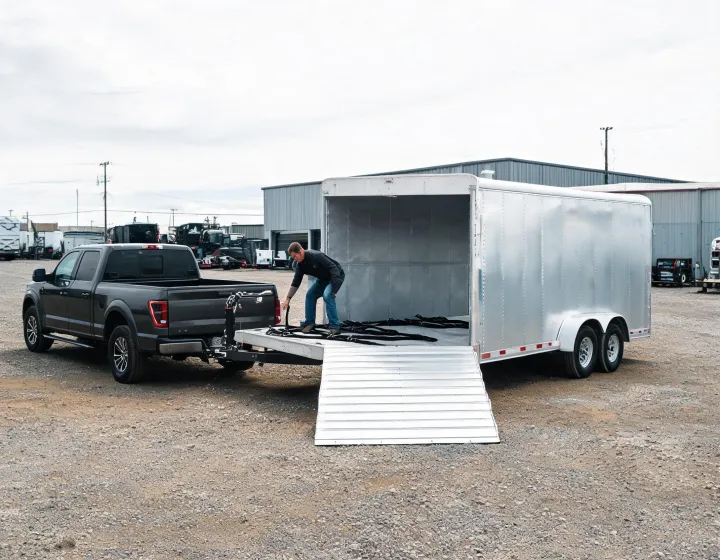
Operating system
Align tow vehicle, trailer, and cargo assumptions
Tow input
Record tow-vehicle model and configuration, GCWR basis, hitch hardware, pickup-bed dimensions, ball height, brake-controller interface, electrical connector, and available clearance through expected articulation.
Duty basis
State cargo dimensions, concentrated and distributed mass, center-of-gravity concerns, route grades, road surfaces, trip frequency, climate exposure, loading equipment, and securement process.
Service and energy
Define auxiliary battery, lighting, shore power, generator preparation, interior electrical loads, ventilation, spare components, maintenance documents, and service access if the enclosure supports mobile work.
Use cases
Translate the operating profile into sourcing questions
Commercial tools and mobile workshop
Fixed cabinets and equipment add empty weight and change the load path.
Ask suppliers to define
Interior layout, floor loading, wall reinforcement, ventilation, power preparation, axle placement, empty weight after fit-out, payload basis, and access for inspection and repair.
Equipment and machinery transport
Concentrated loads, ramp geometry, and securement can govern the build.
Ask suppliers to define
Usable opening, ramp angle and capacity, deck or floor construction, tie-down ratings and locations, cargo center of gravity, axle distribution, brake package, and tow-system assumptions.
Event, display, and sensitive cargo
Weather control, side access, finish, and handling may matter more than maximum volume.
Ask suppliers to define
Door locations, seals, ventilation or climate preparation, lining, lighting, surface finish, loading path, parking constraints, packing method, and destination delivery responsibilities.
Application trade-offs to resolve before quotation acceptance
Aluminum or steel?
Aluminum may reduce tare weight and change corrosion behavior, while steel may offer different cost, section, joining, and repair options. Compare the complete design, weight statement, finish, intended environment, and repair pathway.
Maximum rating or actual payload?
The useful number is tied to the quoted trailer after permanent equipment and options. Ask for actual empty-weight basis and subtract it from the applicable GVWR rather than adopting a family maximum.
More axles or a simpler build?
Axle count affects load distribution, tires, brakes, maneuvering, maintenance, and cost. The decision depends on actual ratings and duty, not a generic assumption that more axles are automatically safer.
Factory price or landed comparison?
Normalize customization, inspection, packing, inland transport, freight, duty, and destination services. Two unit prices on different Incoterms do not describe the same procurement cost.
What limits must stay visible?
Payload depends on configuration; towing depends on both vehicles and hitch setup; documentation depends on exact model and year; and production timing remains subject to supplier confirmation.
Start with an application sketch, load list, or reference trailer
Include quantity, destination, tow-vehicle constraints, dimensions, ratings to verify, inspection points, and the requested evidence set.
Share Application Requirements