Supplier matching workflow
Enclosed gooseneck cargo trailer sourcing
Gooseneck Cargo Desk turns the buyer's cargo duty into a consistent factory request. It coordinates questions and responses without claiming factory ownership, approved-supplier status, stock, or destination approval.
Request Factory Quotes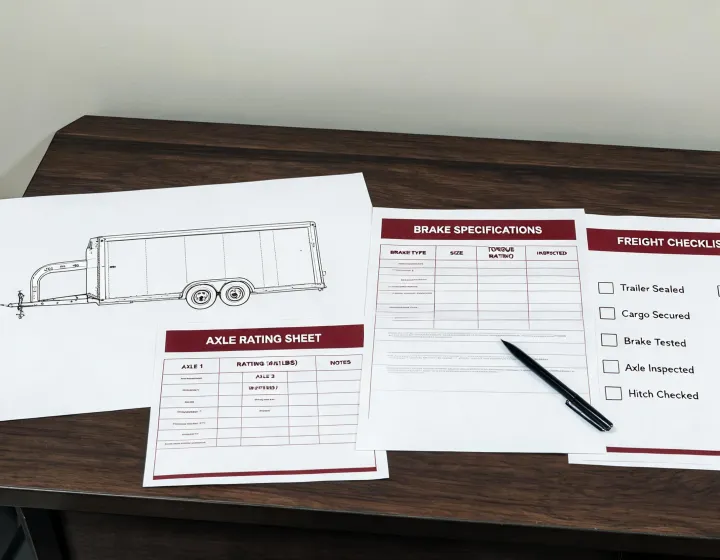
Tow-system alignment
Treat the trailer and tow vehicle as one operating system
Coupling and clearance
Confirm ball size, coupler rating, safety chains, landing gear, pickup-bed clearance, turning envelope, and expected hitch tongue or pin load. A generic gooseneck label does not resolve these interfaces.
Ratings and load path
Record tow-vehicle GCWR and towing assumptions alongside trailer GVWR, axle ratings, tire ratings, brake configuration, empty weight, payload, and planned load distribution.
Electrical and service
Define connector, lighting, breakaway system, brake controller compatibility, battery or auxiliary-power needs, spare components, manuals, and post-delivery service-document expectations.
RFQ controls
Freeze four input groups before supplier outreach
Duty
Describe cargo size and mass, loading equipment, securement, route, frequency, weather exposure, and any need for ramps, side doors, ventilation, or interior power.
Configuration
State usable interior and exterior dimensions, material preferences, floor and wall construction, axle count, brakes, tires, coupler, jack, and permanent equipment.
Quantity
Separate sample from production quantity and identify configuration splits. Ask factories to itemize tooling, drawing approval, inspection, and spare-component costs.
Destination
Give the US state or port, Incoterm, unloading constraints, requested window, packing expectations, and documents the buyer or destination reviewer needs.
Questions that keep supplier matching accountable
How are candidate factories considered?
Responses are organized around product fit and the controlled requirement. Factory identity, capability, certifications, production capacity, and document claims still require due diligence against the actual quotation.
How should MOQ and samples be handled?
Ask each supplier to state minimum order quantity, sample feasibility, sample or tooling cost, revision approval, production terms, and whether a sample represents the final build.
Can a brochure payload be accepted?
No family maximum should replace a calculation for the quoted unit. Compare stated GVWR with actual empty weight and confirm how installed options and load distribution affect usable payload.
What does the sourcing service verify?
The service coordinates requests for drawings, rating information, component documents, inspection records, and commercial scope. Qualified buyer and destination-side parties decide technical and regulatory acceptance.
When is lead time usable for planning?
After the supplier confirms specification, quantity, production slot, inspection plan, packing, and delivery term. Preliminary timing remains an estimate, not a delivery commitment.
Send an enclosed trailer requirement that factories can quote consistently
Include the exact body, dimensions, ratings, tow interface, quantity, destination, timing, inspection, and document expectations. Open alternatives can be quoted separately without changing the common baseline.